The world's largest living fish
No other living fish grows larger than the whale shark.
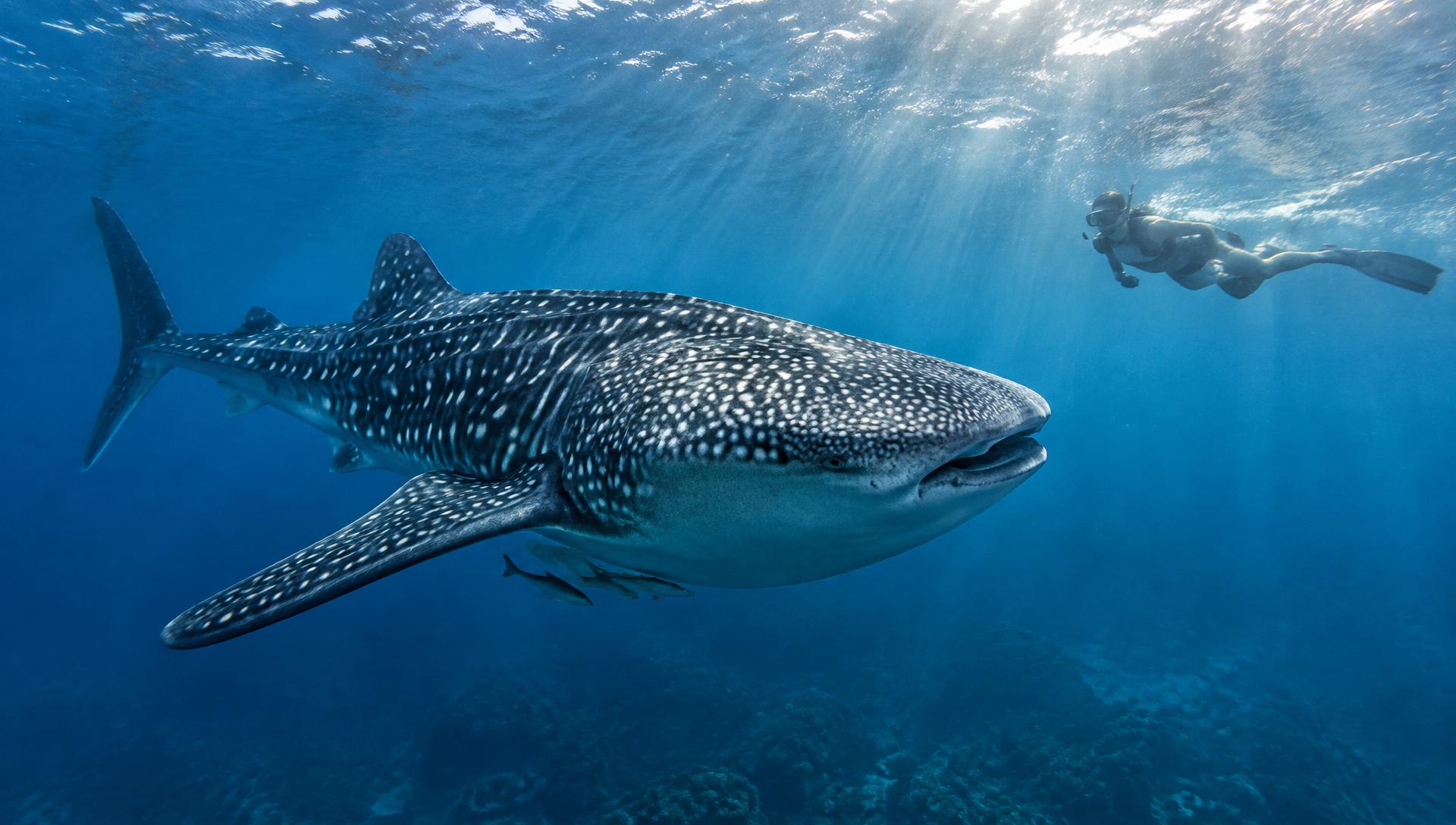
Whale Shark Facts & Conservation
Discover the world's largest fish and learn why protecting these magnificent ocean travelers matters.
Did you know?
No other living fish grows larger than the whale shark.
Its scientific name is Rhincodon typus, the only living species in its family.
Despite its enormous size, it filters plankton, fish eggs, and other small organisms from the water.
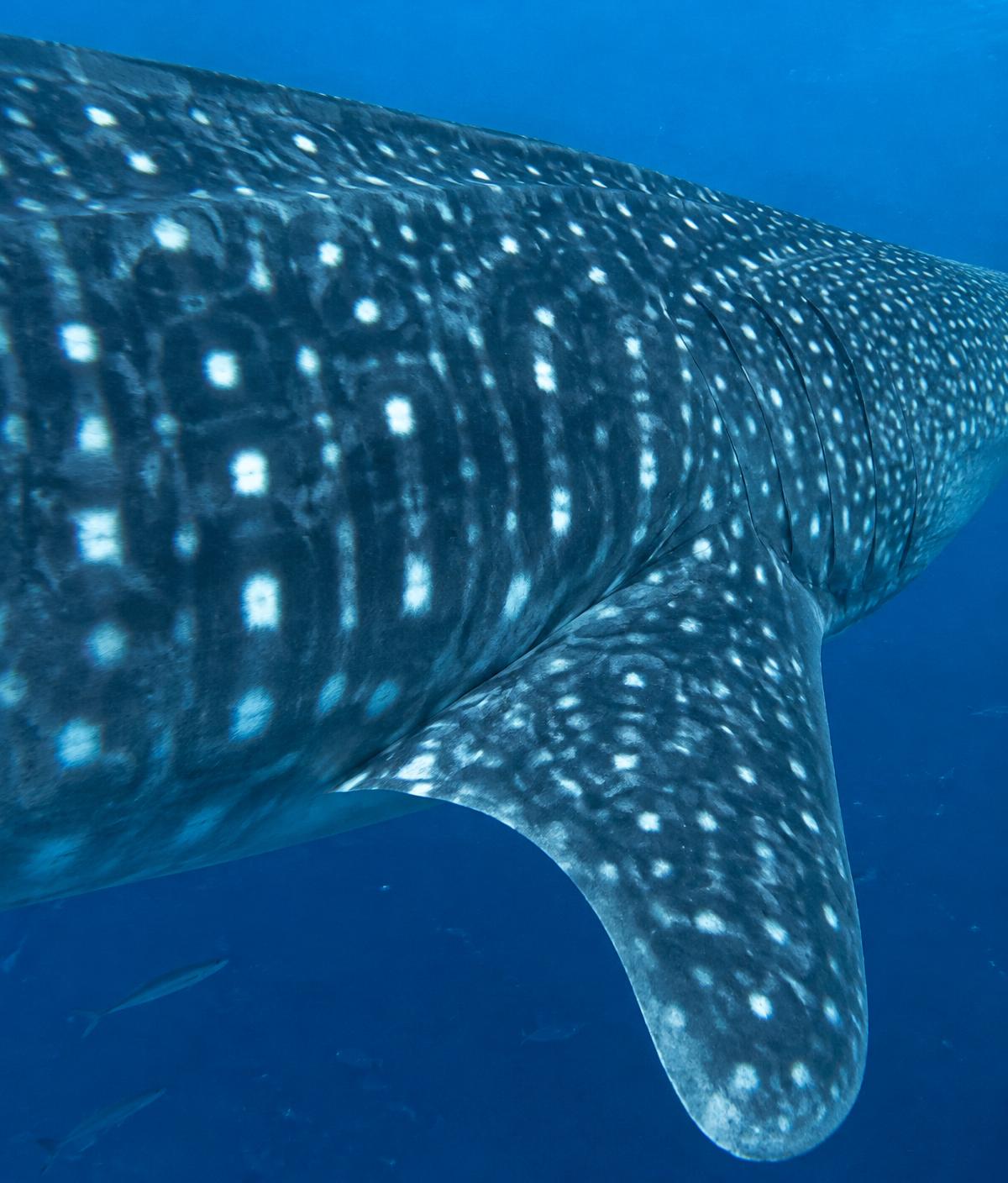
Its white spots and stripes form patterns unique to each individual, which researchers use to identify them.
Whale sharks live in tropical and warm-temperate oceans and can travel long distances.
It breathes through gills and has a cartilage skeleton — it's a shark. The name comes from its whale-like size.
Conservation status
Endangered
Global IUCN Red List category
What does Endangered mean? The IUCN Red List is the world's main record of how threatened species are. "Endangered" means the whale shark faces a very high risk of extinction in the wild. It is not extinct, and it is not listed as Critically Endangered — but its global population is going down.
Why it matters. Whale sharks grow slowly and take many years to mature, so populations recover slowly once numbers fall. Protecting them today helps keep healthy oceans for the future.
Fishing gear
Accidental capture in nets and other fishing gear.
Vessel strikes
Whale sharks often feed near the surface, where boats can hit them.
Other human pressures
Targeted fishing in some regions and poorly managed tourism add to the strain.
Why it matters
Responsible tourism can give local communities a reason to protect whale sharks — but only when encounters are calm, respectful, and well managed.
Healthy oceans support the plankton whale sharks depend on. Reducing pollution and protecting coastal habitats helps them and countless other species.
Scientific research — including photo identification from each shark's unique spots — helps experts understand where whale sharks travel and how populations are changing.
Fewer harmful interactions, such as boat strikes, touching, and crowding, give each animal space to behave naturally.
Our principles
FAQ
Meet the gentle giants in the wild and discover why every responsible encounter matters.